


Programme Agenda
1:45 PM – 2:00 PM Registration
2:00 PM – 2:30 PM AIM Healthcare Facility Tour
2:30 PM – 2:40 PM Welcome Remarks, Dr Kong Why Hong, Founder, AIM Healthcare / iElder
2:40 PM – 2:50 PM Opening Remarks, Mr Yang Chor Leong, President, PAWE Subang Jaya
2:50 PM – 3:30 PM Health Talks: Common Health Problems in Older Adults: What Families Should Know Assoc. Prof Dr Yau Weng Keong
Dr Yau Weng Keong is a leading geriatrician in Malaysia with extensive experience in healthy ageing, dementia care, geriatric syndromes, incontinence, frailty, palliative care, and aged care services. He has been widely invited as a speaker at national and international conferences over more than two decades
3:30 PM – 3:45 PM Q&A Session
3:45 PM – 3:50 PM Group Photo
3:50 PM – 4:30 PM Refreshments & Networking
4:30 PM Adjourn

Welcome Remarks by Olivia Quah, Co Founder of AIM Healthcare
Olivia Quah gave welcome remarks on how AIM Healthcare started 14 years agon with Dr. Kong Why Hong’s Vision for Integrative MedicineAIM Healthcare’s integrative approach was strongly shaped by our Founder, Dr. Kong Why Hong, who is dual-trained in both Western medicine and Traditional Chinese Medicine.Dr. Kong has always believed that senior care should not be limited to treating one illness at a time. Many older adults live with multiple health conditions, pain, mobility issues, medication concerns, and emotional challenges. Because of this, he saw the need for a more complete model of care — one that combines the strengths of modern medical science with the holistic wisdom of Chinese medicine.To build this foundation, Dr. Kong pursued studies in both fields. He received training in Traditional Chinese Medicine from Guangzhou University of TCM, later earned his medical doctorate from Crimea State Medical University, and went on to specialise further in TCM, integrative medicine, and geriatric care.His vision was to bring these disciplines together in a practical and safe way for seniors. At AIM Healthcare, this means combining medical consultation, chronic disease management, rehabilitation, physiotherapy, acupuncture, TCM, nutrition, wellness, and nursing care under one roof.This East-meets-West approach allows AIM Healthcare to look at the whole person — not only the disease, but also the senior’s mobility, recovery, pain management, emotional wellbeing, independence, and quality of life.That is why AIM Healthcare was built as an integrated senior-care centre: to give families one trusted place where modern medicine and traditional healing can work together to support healthier ageing.
She also share Ageing in Place concept to give birth of iElder with this mission. She shared about home hazard assessment and modification come into picture.
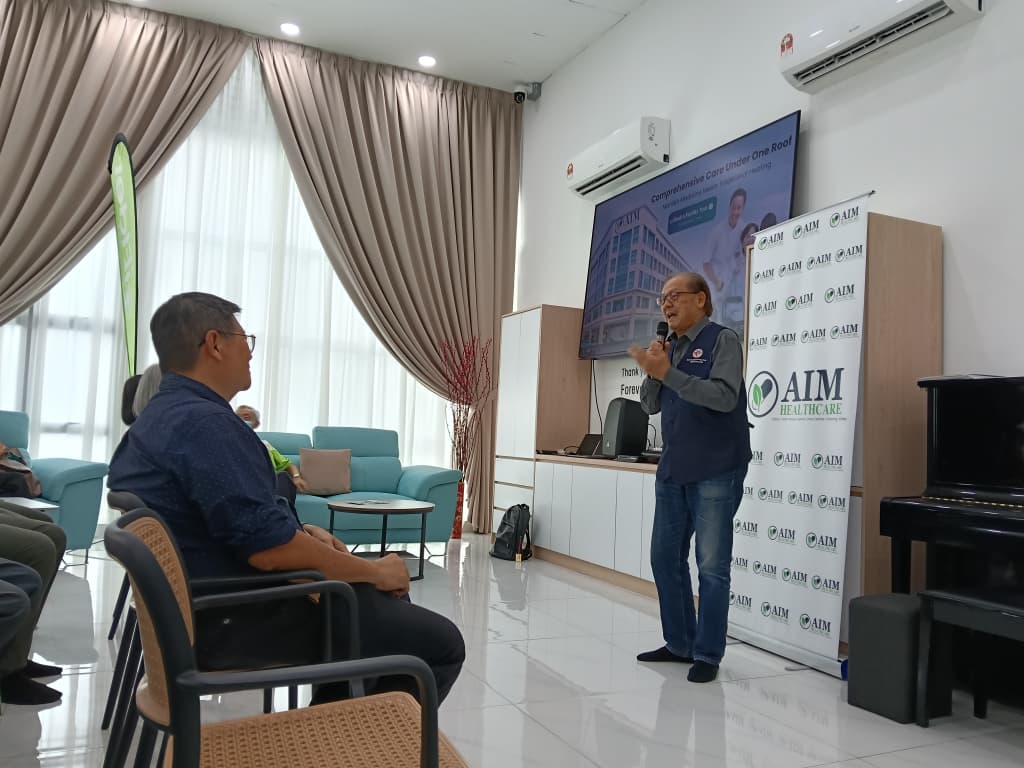
President of PAWE Subang Jaya, Mr Yang’s opening remarks
Mr Yang opened the session by welcoming the participants and highlighting the important role of PAWE Subang Jaya in supporting active, healthy, and meaningful ageing among older adults in the community. He shared that PAWE serves as a platform where seniors can continue to stay socially connected, physically active, mentally engaged, and emotionally supported.
He explained that PAWE Subang Jaya organises a range of activities designed to encourage seniors to participate, learn, and build friendships. These activities help older adults maintain their independence, confidence, and sense of belonging, while also reducing loneliness and social isolation. Through regular programmes, PAWE creates opportunities for seniors to remain involved in community life and continue contributing their experience and wisdom.
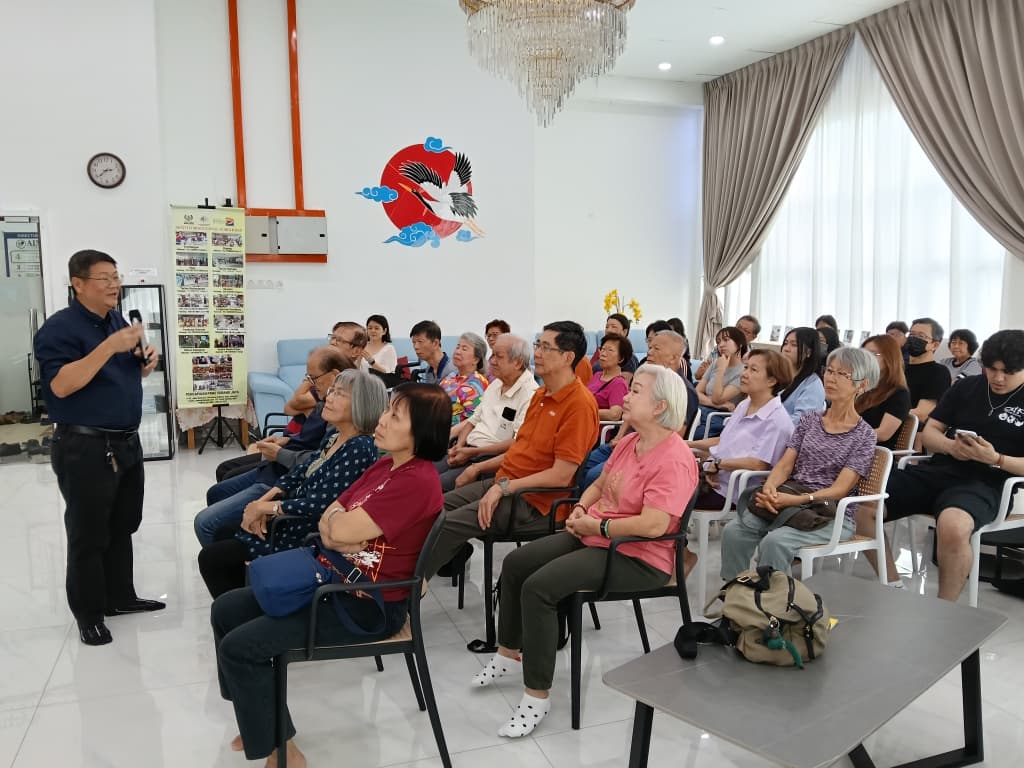
Dr Yau's main lecture
Dr Yau Weng Keong’s presentation, “Common Health Problem in Older Adults: What Families Should Know,” explains that older adults are a highly diverse group whose health needs become more complex with age, frailty, multiple chronic illnesses, reduced physiological reserve, and changing social support. A key concept is that even a minor illness in a frail older person can trigger a serious “cascade of deterioration,” leading to falls, immobility, delirium, incontinence, disability, institutionalisation, or death.
The presentation highlights the common “geriatric giants” or “I” problems in older adults, including immobility, instability and falls, impaired cognition, incontinence, iatrogenic problems, impaired hearing and vision, infection, malnutrition, isolation and depression, insomnia, and poverty. Dr Yau places particular emphasis on dementia, delirium, urinary incontinence, falls, polypharmacy, hospital-related complications, and the under-recognition of Alzheimer’s disease and late-life depression.
A major theme is that Malaysia is ageing rapidly, creating growing pressure on families, healthcare services, social care systems, and the economy. The presentation stresses that older adults often require integrated, person-centred, multidisciplinary care, rather than fragmented treatment by separate services. This includes coordinated input from doctors, nurses, pharmacists, dietitians, physiotherapists, occupational therapists, social workers, caregivers, and community services.
Dr Yau also discusses the importance of healthy, active, and successful ageing. Prevention should begin early and continue throughout life. Practical strategies include maintaining physical activity, eating a healthier diet, preventing falls, managing chronic diseases, keeping mentally and socially active, reducing stress, laughing more, sleeping well, and supporting emotional and cognitive health. The presentation repeatedly reinforces that it is “never too late” to improve health, resilience, and quality of life.
The future of geriatric medicine is presented as predictive, preventive, personalised, and participative, supported by technology, artificial intelligence, wearable monitoring, digital biomarkers, and better community-based care. However, Dr Yau also notes major challenges in Malaysia, including limited geriatric specialist resources, fragmented services, and the need to “connect the dots” between hospitals, primary care, community services, families, NGOs, and long-term care.
Overall, the key message is that healthy ageing is an investment, not a cost. Families, communities, healthcare providers, and policymakers must work together to help older adults live not only longer lives, but better lives — with dignity, independence, function, meaning, and quality of life.
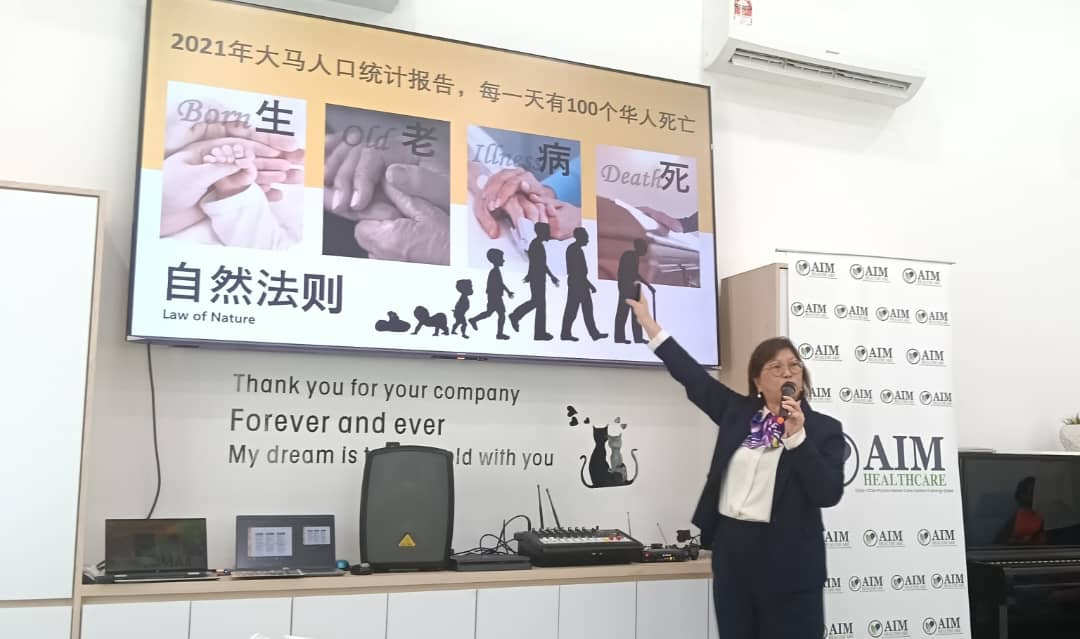
Sharon Lee's Advance Life Planning sharing
Sharon Lee’s presentation, “Leaving a Legacy,” focuses on the importance of pre-planning funeral and bereavement arrangements at different stages of life. The main message is that pre-planning is not only about making practical arrangements in advance, but also about leaving behind a legacy of love, clarity, and peace for family members.
The presentation explains that when people do not pre-plan, their family members may be left to make urgent and emotional decisions during a very difficult time. This can lead to hasty choices, arguments, uncertainty, financial burden, stress, disputes over burial, cremation or ash scattering, strained relationships, and regrets. Families may also have to quickly decide on matters such as the obituary photo, religious service, burial or cremation, final resting place, farewell ceremony theme, and clothing for the deceased.
Sharon introduces bereavement care as a one-stop service that supports families through the practical procedures after a death, whether it occurs at home or in hospital. These services include reporting the death, obtaining the burial clearance permit, securing the release of remains, embalming, encoffinment, casket and urn arrangements, funeral parlour services, burial land, ash burial, sea burial, columbarium placement, ancestral tablets, and even pet farewell services.
A key theme of the presentation is that a funeral can be seen as a “graduation of life ceremony” and a meaningful farewell that reflects the person’s values, beliefs, and wishes. Pre-planning helps ensure that the farewell is personalised, dignified, and aligned with what the individual and family truly want.
The presentation also highlights Sharon’s role in providing professional, independent, and personalised service. Testimonials describe her as patient, responsive, thoughtful, and willing to go the extra mile, bringing calm, comfort, and reassurance to families during challenging moments.
Overall, the presentation encourages individuals and families to discuss and plan end-of-life arrangements early, so that loved ones are spared unnecessary confusion and stress. Pre-planning allows people to leave a legacy of love by giving their families direction, comfort, and peace of mind when it matters most.